
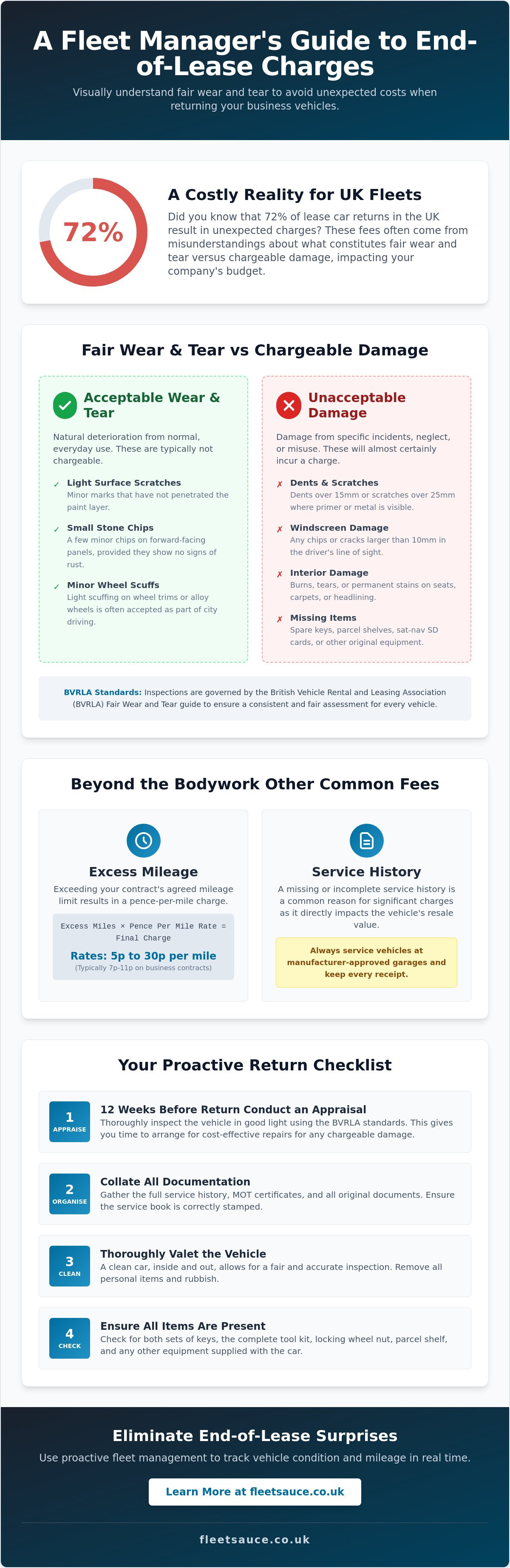
Did you know that 72% of lease car returns in the UK result in unexpected charges? It's a frustrating reality for many fleet managers who feel at the mercy of subjective damage assessments when facing end-of-contract charges for business car leases.
You likely worry that a few minor scratches or a handful of extra miles will lead to a massive bill that blows your quarterly budget.
We understand that managing multiple returns whilst trying to keep costs low is a significant administrative burden.
The good news is that these costs aren't an inevitable part of the process. They're often the result of a lack of proactive oversight.
We're here to help you take back control. You'll learn how to navigate fair wear and tear standards with precision and avoid those stinging fees when returning your vehicle.
By the end of this guide, you'll have a clear strategy to handle excess mileage and the confidence to manage the entire return process without any financial surprises.
Key Takeaways
- •
Understand the difference between natural wear and specific damage to protect your budget during the return process.
- •
Discover how to navigate business car lease end-of-contract charges by keeping accurate service records and monitoring mileage.
- •
Prepare for inspections by conducting a thorough appraisal twelve weeks before your contract ends to address issues early.
- •
Learn about your right to request an independent vehicle examination if you feel an invoice for damage is unfair.
- •
Use proactive fleet management software to track vehicle condition and mileage in real time, preventing end-of-lease surprises.
Table of Contents
If you have any questions about your return, contact our expert team today to speak with a specialist.
The definition of fair wear and tear for business vehicles
Returning a vehicle at the end of a contract often feels like a test you haven't studied for. However, the standards used to judge your car are actually very clear.
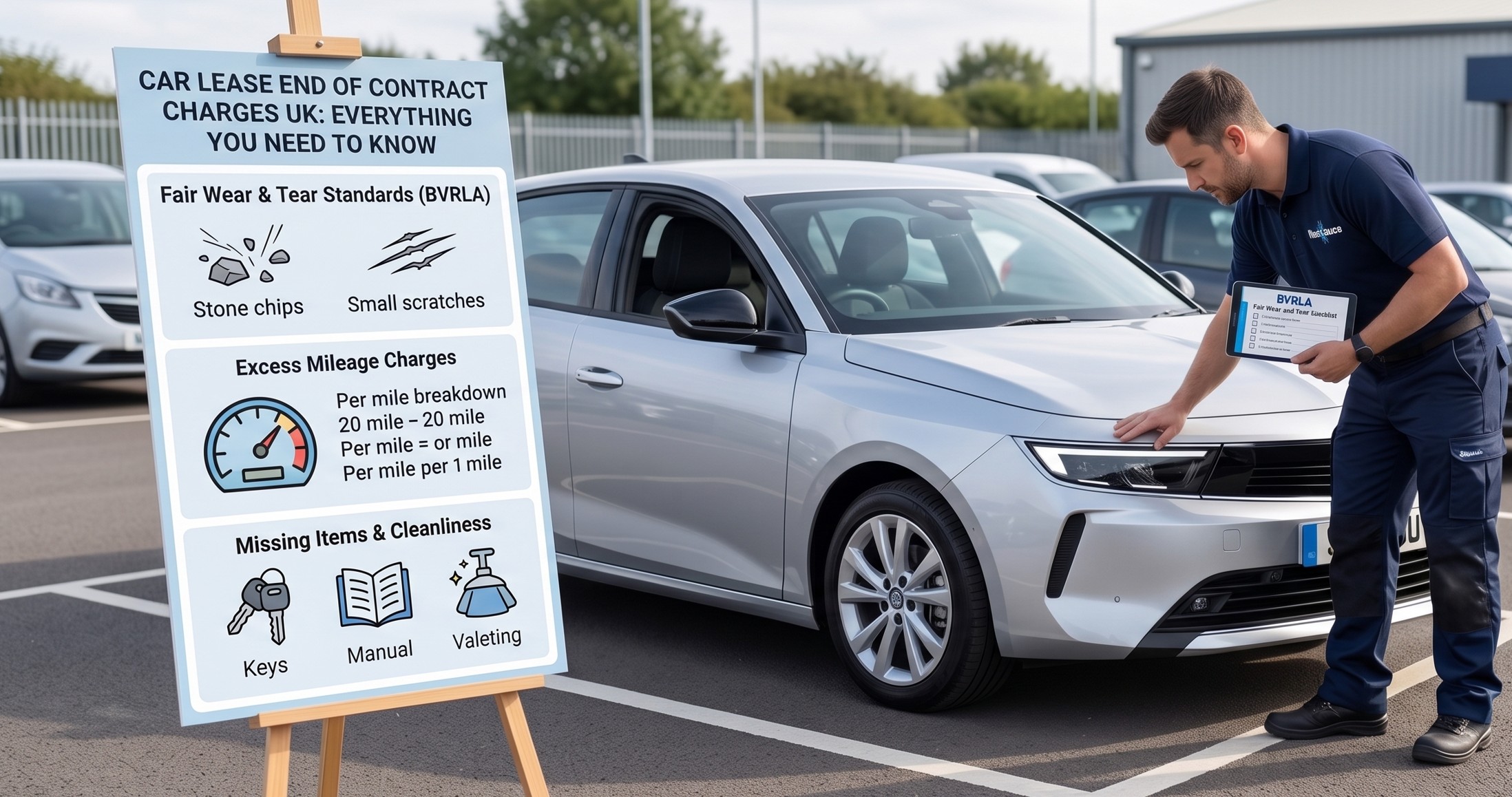
Fair wear and tear refers to the natural deterioration that happens to a vehicle through normal, everyday use. It covers the small things that are bound to happen over several years on the road, such as light surface scratches or tiny stone chips.
This concept is fundamental to vehicle leasing because it protects both the driver and the car's owner. It ensures you aren't penalised for the basic reality of driving.
It is vital to distinguish this natural ageing from actual damage. Damage results from specific events or neglect, such as a collision, hitting a high kerb, or failing to clean up a spill that stains the upholstery.
Funder companies care deeply about this because they need to sell the car once you return it. If the car is in poor condition, its residual value drops, which is exactly why end-of-contract charges are applied to business car leases. These fees cover the cost of restoring the vehicle to a saleable state for the second-hand market.
The role of the BVRLA in lease returns
The British Vehicle Rental and Leasing Association (BVRLA) is the trade body that keeps everything fair. They publish a definitive guide that outlines exactly what counts as acceptable wear and what doesn't. This ensures the inspection process is consistent and transparent across the industry.
Without these guidelines, assessments would be entirely subjective. At Fleetsauce, we partner only with reputable funders who strictly adhere to these standards, giving you peace of mind knowing your vehicle will be judged against a professional, nationwide benchmark.
Acceptable versus unacceptable vehicle condition
Knowing the specifics can save you a lot of stress. Small stone chips on the bonnet are usually fine, provided they haven't started to rust. Similarly, very minor scuffs on the wheel trims are often accepted as part of city driving.
However, larger issues will almost certainly lead to business car lease end-of-contract charges. Common problems that usually incur a fee include:
-
Dents larger than 10 to 15mm or any dent on the roof.
-
Scratches longer than 25mm where the primer or bare metal is visible.
-
Chips or cracks in the windscreen that are larger than 10mm.
-
Burns, tears, or permanent stains on the seats or carpets.
Don't forget the small details. Missing items like the spare key, the original parcel shelf, or the SD card for the sat-nav will trigger an automatic charge. These items are expensive to replace and are essential for the next owner. If you are looking for a new vehicle for your company, check out our business car leasing options to see how we help our clients manage these transitions smoothly.
If you're worried about your current mileage or maintenance status, get in touch with our team for a quick review of your agreement.
Excess mileage and other common contract fees
Whilst damage to the bodywork is a major concern, it isn't the only way that business car lease end-of-contract charges can accumulate. Mileage is often the largest variable in your final bill. Every lease agreement includes a pre-agreed mileage limit that reflects the vehicle's expected depreciation.
If you exceed this limit, the funder will charge a fee for every additional mile. These rates are set at the start of your contract and typically range from 5p to 30p per mile, though many standard business contracts sit between 7p and 11p.
Calculating the cost of excess mileage
The pence-per-mile structure is straightforward but can be punishing if you haven't tracked your journeys.
For a fleet manager, this risk is often mitigated through mileage pooling, which allows high-mileage drivers to be offset by those who travel less. It's a savvy way to balance the books across the entire company fleet.
We always recommend reviewing your mileage limits mid-contract. If your business requirements have changed, it's often possible to adjust your agreement rather than waiting for a large final invoice. If you need help analysing your current usage, you can speak to our specialists for advice on your options.
Documentation and maintenance requirements
A vehicle's value isn't just about its physical appearance; its paper trail is equally important. A missing service history is one of the most common reasons for heavy end-of-contract charges on business car leases.
Funders require a full history to maintain the car's resale value. If you miss a scheduled service, you'll likely face a significant financial penalty. Similarly, the V5C logbook and any technical manuals must be present in the vehicle upon collection.
Many businesses now choose maintenance packages to automate this process. These packages ensure that every service is completed on time and by approved technicians, which guarantees compliance with the BVRLA Fair Wear and Tear Guide. Beyond the engine, don't overlook the small items. Missing spare keys or sat-nav SD cards are high-cost items that are billed at full retail price.
Finally, ensure your vehicle is ready on the agreed date.
Cancelling a collection at the last minute or having an inaccessible vehicle will result in an aborted collection fee, adding unnecessary costs to your exit strategy.
To ensure your fleet is ready for return, get expert advice from our team today.
How to prepare your vehicle for a lease return inspection
Preparation starts long before the collection driver arrives at your door. We recommend beginning your vehicle appraisal at least ten to twelve weeks before your contract expires. This window is crucial.
It gives you enough time to spot issues and organise repairs without the pressure of a looming deadline. If you leave it until the final week, you'll likely be stuck with whatever business car lease end-of-contract charges the inspector decides to apply. Taking a proactive approach allows you to control the narrative of the return rather than simply reacting to a bill.
A professional valet is a small investment that can save you significant sums in the long run. Inspectors are human; they are far more likely to be lenient on a pristine car than one covered in road salt and crumbs.
A clean car also makes your own inspection much easier. Dirt and dust can easily hide small dents or scratches that will only become apparent when the inspector wipes a panel clean. If you manage a large number of vehicles, our fleet solutions can help you stay on top of appraisal cycles across your entire organisation.
A step-by-step appraisal process
Start by washing the car thoroughly and allowing it to dry completely. Water droplets can act like tiny lenses, masking surface imperfections.
Once dry, use the light reflection method. Stand a few metres away and look along the side of the car. Use the reflection of a straight line, like a garage door or a fence, to check for ripples in the bodywork. Any distortion in the reflection usually indicates a dent.
Pay close attention to the roof and all glass surfaces. Even a small chip in a light lens can lead to a significant charge if it isn't addressed before return. Don't forget to check the wheels for kerbing and the interior for any lingering odours or upholstery marks.
Deciding between repairs and charges
You often face a choice: pay for a repair now or wait for the invoice later. In many cases, a private SMART repair (Small Medium Area Repair Technology) is cheaper than the standardised business car lease end-of-contract charges issued by a funder.
However, the quality of work must be exceptional. If a repair is obvious or uses the wrong shade of paint, the inspector will likely reject it and charge you for a full professional respray anyway.
Always use reputable technicians and keep your receipts as proof of professional maintenance. This evidence can be vital if there is a disagreement during the final inspection.
If you have received an invoice that you believe is unfair, contact our team for guidance on your next steps.
The process for disputing end-of-contract charges
Receiving an unexpected bill after you have said goodbye to a vehicle is never a pleasant experience. Typically, you will receive an invoice for business car lease end-of-contract charges within four weeks of the vehicle being collected.
This document provides a breakdown of every item the inspector flagged as being outside the acceptable standards. If you believe these findings are incorrect, you have the right to challenge them. You are not simply required to accept the first figure you are given.
One of your most powerful tools in a disagreement is the right to an independent examination. If you contest the condition report, you can request that a qualified engineer unaffiliated with the leasing company re-examine the vehicle. It's a fair process: if the engineer's report supports your claim, the funder will usually waive the disputed fees and refund the cost of the examination.
This ensures that the final decision is based on technical facts rather than a single inspector's opinion.
Gathering evidence at the point of collection
Your defence against unfair charges begins on the day of collection. You must take high-quality, time-stamped photographs of every panel, the wheels, the glass, and the interior. These images serve as your insurance policy against damage that might occur whilst the vehicle is being transported to the auction site.
Being present during the inspector's walkaround is equally vital. If they flag a scratch that you believe is within the 25mm limit, point it out immediately. Most importantly, never sign a collection note if you disagree with the findings. You can sign it whilst clearly marking specific items as "disputed" to protect your position.
Escalating a dispute to the funder
If the initial conversation with the collection agent doesn't resolve the issue, you should follow the funder's formal complaint procedure. Write to them clearly and include your evidence, such as your own photos or receipts for any professional repairs you had completed.
If this does not lead to a resolution, you can take the matter further. The BVRLA offers an Alternative Dispute Resolution (ADR) service that acts as an impartial mediator. They will review the case against their Fair Wear and Tear Guide to reach a final, binding decision. This service is designed to be a low-friction way to settle business car lease end-of-contract charges without needing legal action.
If you need help understanding a recent inspection report or want to ensure your next return goes smoothly, speak with our expert advisors for professional support.
If you want to streamline your fleet and avoid future fees, get in touch with our team for a full fleet audit today.
Using fleet management to eliminate unexpected lease costs
Managing a single vehicle is manageable; overseeing an entire fleet is a complex logistical puzzle. Proactive management is the most effective way to eliminate the risk of end-of-contract charges on business car leases across your entire organisation. Instead of reacting to damage or mileage issues at the end of a three-year term, you should monitor your vehicles throughout their lifecycle.
Visibility is everything. Regular mid-contract inspections allow you to identify small issues before they escalate, ensuring maintenance is performed whilst costs remain manageable.
Data drives better decisions for your bottom line. By staying ahead of the appraisal cycle, you remove the element of surprise that often accompanies the return process. We position ourselves as your Expert Guide, providing the tools and knowledge needed to maintain fleet compliance without the administrative headache.
This partnership approach ensures that your drivers are accountable and your budget remains predictable.
The benefits of FleetHub for contract monitoring
Our proprietary software, FleetHub, is designed to take the guesswork out of fleet oversight. It tracks mileage in real time, alerting you the moment a driver deviates from their agreed limit.
This gives you the power to reallocate vehicles amongst your team or adjust contracts before you hit the threshold for expensive excess mileage fees. The dashboard also provides a clear view of all upcoming lease end dates and automated reminders for MOTs and services.
This protects your vehicle's history and ensures you never miss a vital maintenance milestone that could trigger business car lease end-of-contract charges later on.
Strategic planning for fleet renewals
Rushed decisions often lead to expensive mistakes at the end of a contract. By planning your renewals at least six months in advance, you avoid the pressure of accepting unfair return terms just to get a new vehicle on the road.
We encourage you to contact our team for a full fleet audit to identify opportunities to save costs. Whether you are looking for new business car leasing or want to explore electric options, we help you transition smoothly. Our goal is to ensure your next fleet is perfectly tailored to your current usage patterns, effectively shielding your business from future financial surprises.
To ensure your fleet return is handled professionally, contact our team of experts for a consultation.
Protect your fleet budget today
Navigating the end of your agreement doesn't have to be stressful. By starting your vehicle appraisals twelve weeks early and keeping a close eye on your mileage through FleetHub, you can effectively eliminate the risk of unexpected business car lease end-of-contract charges.
You now have the knowledge to distinguish between fair wear and tear and actual damage, giving you the confidence to dispute any unfair findings with the backing of BVRLA standards.
Our team is here to help you manage every aspect of your fleet, from real-time tracking to dedicated support for your next renewal. We provide expert guidance on industry standards and help you plan your next steps with transparency and ease. This proactive approach ensures your budget remains protected whilst your drivers stay mobile.
Contact our fleet experts for advice on lease returns today and let us help you streamline your transition. You have all the tools necessary to ensure a smooth return, and we are ready to support your next move on the road.
Frequently Asked Questions
What is the most common end-of-lease charge for businesses?
The most common business car lease end-of-contract charges are for excess mileage and missing items, such as spare keys or service books. You might also face costs for tyre damage that falls outside the fair wear and tear guidelines.
Ensuring all original documents and accessories are in the vehicle is the simplest way to avoid these fees. Regular checks throughout your contract will help you spot these issues before the collection date.
Can I repair my lease car myself before returning it?
You are entitled to arrange for repairs yourself before the inspector arrives. However, every repair must be completed to a professional standard that matches the original factory finish. If a repair is visible or poorly executed, the leasing company will likely charge you to redo the work properly.
It's wise to use a reputable garage and retain all invoices as evidence that you maintained the vehicle to a high standard whilst it was in your care.
How much are excess mileage charges on a business lease
Excess mileage charges are calculated using a fixed pence per mile rate agreed at the start of your lease. If your contract specifies a rate of 10p per mile and you exceed your limit by 1,000 miles, you'll be invoiced for £100 plus VAT.
These rates vary depending on the vehicle type. If your driving habits change, you can often renegotiate your limit mid-contract to avoid high business car lease end-of-contract charges.
What happens if I miss a service on my lease vehicle
Missing a scheduled service often results in heavy financial penalties because it significantly reduces the vehicle's resale value. Most funders insist on a full-service history to comply with the terms of the contract hire.
You may be charged a specific penalty fee or held liable for any mechanical faults resulting from neglect. Opting for a maintenance package is an excellent way to ensure your fleet remains compliant without manual tracking.
Is a small scratch considered fair wear and tear
A small scratch is usually considered fair wear and tear if it's under 25mm in length and hasn't exposed the primer or bare metal.
The BVRLA provides clear measurements for what's acceptable on different parts of the car. If the mark is light enough to be polished out, you generally won't be charged. Be careful with multiple scratches on one panel, as these can still trigger a fee by affecting the car's overall appearance.
Do I have to pay for new tyres before returning the car?
You only need to pay for new tyres if the tread depth is below 1.6mm or if the sidewalls are damaged. This 1.6mm limit is the legal requirement in the UK.
If the inspector finds uneven wear or significant cuts, you'll face a replacement charge. Checking your tyres a few weeks before the return date allows you to fit budget-friendly replacements that meet the required standards yourself, potentially saving you money on the final bill.

Guide Verified & Audited By
Director at Fleetsauce


