
SMMT data shows that 64% of UK small businesses feel unprepared for the transition to electric fleets despite a 21% rise in registrations.
You probably find the shifting tax landscape and rising fuel prices a constant drain on your company's bottom line.
Securing the right van leasing agreement in the UK is now more about strategic financial planning than just picking a vehicle from a showroom.
In our view, you can gain total control over your budget with fixed monthly costs and 100% VAT recovery on qualifying lease payments.
Experience since 2010 shows that proactive fleet management reduces vehicle downtime by up to 15% compared to traditional ownership models.
We'll show you how to navigate the 2026 market by focusing on 0% BiK rates for electric vans and the latest BVRLA guidelines.
Best practice suggests that a well-structured lease provides the stability your business needs to grow without the risk of depreciating assets.
This guide provides the expert insights needed to modernise your fleet while keeping your operational costs predictable with fixed monthly rentals over 24 to 60 months.
Key Takeaways
- •
Understand why van leasing in the UK is the strategic choice for 2026, offering tax-efficient solutions where rentals are 100% offset against corporation tax.
- •
Compare Business Contract Hire and Finance Lease to find the most cost-effective finance model, allowing your SME to recover 100% of the VAT on monthly rentals.
- •
Navigate the 2026 ZLEV mandate by learning how to utilise the 4% Benefit-in-Kind tax rate to lower your fleet's total running costs.
- •
Streamline your compliance using FleetHub software to achieve operational efficiency, reducing vehicle downtime by 15% through automated maintenance alerts.
- •
Learn how Fleetsauce provides bespoke fleet solutions that provide access to exclusive rates from a panel of 10+ top UK funders while following strict BVRLA guidelines.
Table of Contents
How Van Leasing Works for UK Businesses in 2026
75% of new fleets are now leased to avoid the unpredictable risks of vehicle depreciation.
Experience since 2010 shows that fixed costs improve cash flow forecasting for small and medium enterprises.
UK businesses increasingly view van leasing uk as a strategic service rather than a simple purchase.
This model functions as a long-term rental agreement where you pay for the vehicle's usage without the burden of ownership.
Buying vehicles outright drains liquid capital and exposes your balance sheet to market volatility. Leasing solves this by providing a predictable monthly expense with no resale risk.
The Core Mechanics of Business Contract Hire
The process begins with an initial rental followed by a set period of monthly payments. You select a term, usually 24 to 60 months, and return the vehicle at the end of the contract.
Understanding how vehicle leasing works ensures your business avoids the pitfalls of owning depreciating assets. The finance company remains the registered owner, meaning they handle the van's disposal at the end of your term.
We find that affordable rentals often start from £250 per month plus VAT for small panel vans on 48-month terms. This entry point allows startups to access brand new, reliable transport without a massive upfront investment.
BVRLA guidelines suggest that fair wear and tear standards protect both parties from unexpected end-of-contract charges. These standards provide a clear framework for vehicle condition, ensuring transparency when you hand the keys back.
VAT and Tax Efficiency for Commercial Vehicles
VAT-registered businesses can access a 100% VAT reclaim on their monthly rentals for commercial vehicles. This provides a direct financial advantage compared to purchasing, where VAT recovery rules can be more restrictive.
The current 20% VAT rate represents a significant portion of vehicle costs that businesses can effectively offset through leasing. By reclaiming this, you immediately lower the effective cost of your fleet operations.
Leasing payments are also 100% tax deductible against corporation tax profits. This tax-efficient structure makes van lease deals.
Comparing Business Contract Hire and Finance Lease Options
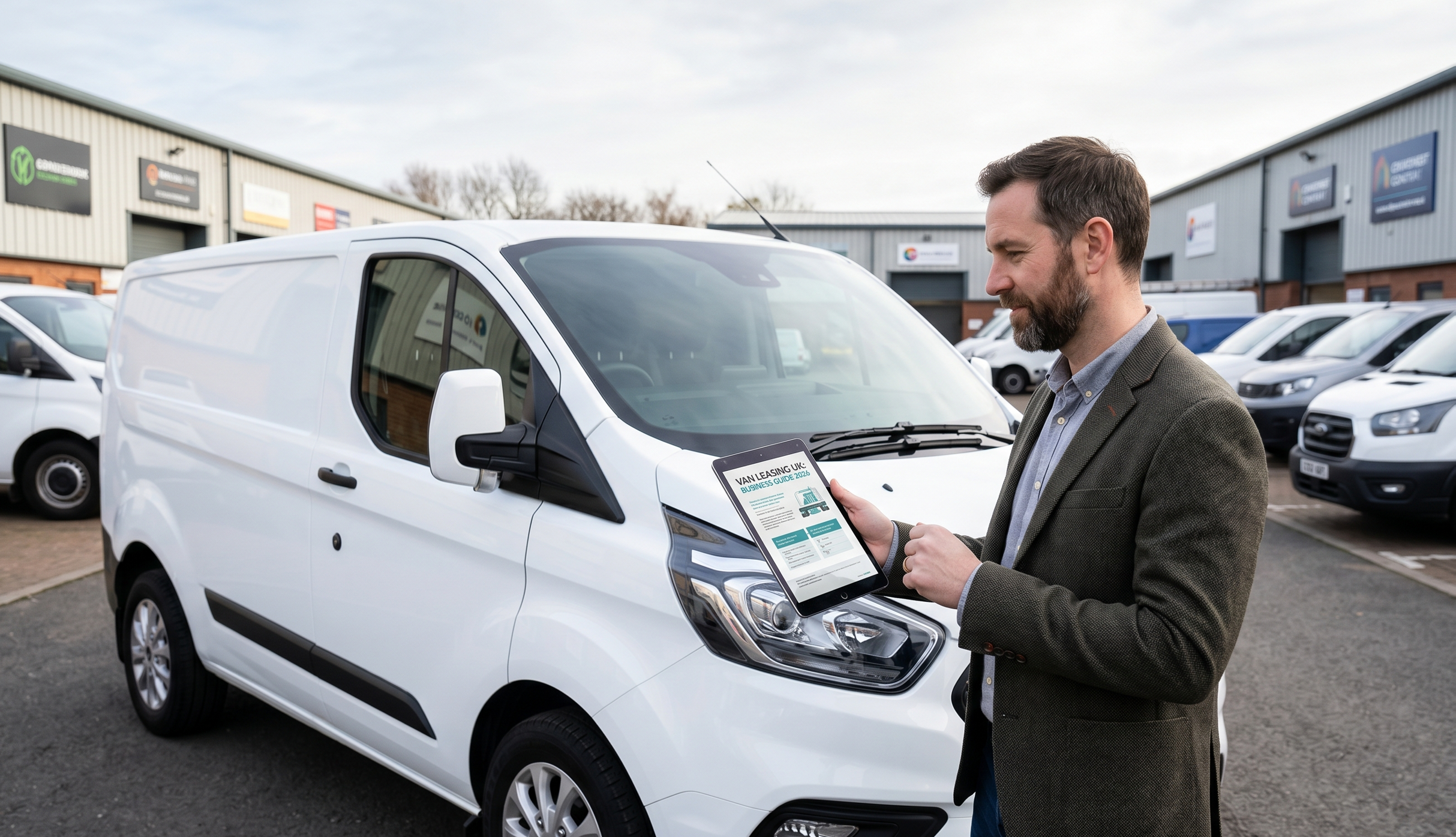
85% of our clients currently opt for Business Contract Hire to manage their commercial fleets. UK businesses face rising operational costs and strict emissions targets. Choosing the wrong finance product can lock capital into depreciating assets. Identifying the right structure for your van leasing UK strategy ensures long-term fiscal stability. Experience since 2010 shows that SMEs often struggle to choose between fixed-cost certainty and potential equity. In our view, the primary distinction lies in who carries the risk of the vehicle's falling value. Our expert team helps you weigh these options against your specific cash flow requirements.
Contrast between finance products is essential for sole traders who need to maintain liquid capital. Business Contract Hire provides a fixed-cost solution, while Finance Lease offers a more flexible end-of-life approach.
The Benefits of Business Contract Hire
Business Contract Hire (BCH) is a long-term rental in which you return the vehicle at the end of the agreed period. The funder assumes all disposal risk, protecting your balance sheet from unpredictable residual-value declines. Best practice is to align the lease term with the vehicle warranty period to avoid unexpected repair bills. This typically means a 36- or 48-month term to match the manufacturer's coverage.
You can often secure in-stock van leasing with 14-day lead times for rapid deployment. This speed helps businesses replace non-compliant vehicles quickly to meet the Zero Emission Vehicle (ZEV) mandate requirements.
Fixed monthly rentals allow for precise VAT forecasting, as 100% of the VAT is reclaimable on the finance element. It's a hassle-free method for 9 out of 10 sole traders who want to avoid the administrative burden of selling a used vehicle.
When to Consider a Finance Lease
Finance Lease offers a different path by allowing businesses to benefit from any equity at the end of the contract. While you don't own the van, you receive a percentage of the sale proceeds, often 95% or higher. BVRLA guidelines suggest this is ideal for high-mileage users who may exceed standard wear-and-tear limits.
The structure includes a balloon payment, a large final rental that reduces your monthly cash outlay.
Lower monthly payments help your cash flow, while the lease rentals can often be 100% tax-deductible against your profits. It's a cost-effective solution for firms with 20% or 40% tax liabilities seeking to maximise deductions. Competitive rates on these products often result in monthly savings of up to 15% compared to traditional hire purchase. Businesses operating in Clean Air Zones (CAZ) find this flexibility vital for fleet rotation every 3 to 5 years.
If you need a bespoke quote for your fleet, our team can help you find van lease deals that fit your budget.
Transitioning to Electric Vans Under the ZLEV Mandate
24% of all new van sales in 2026 must be zero-emission vehicles under the UK government’s Zero Emission Vehicle (ZEV) mandate.
This legislative target forces manufacturers to prioritise electric production to avoid heavy financial penalties.
In our view, the infrastructure improvements in 2026 have removed previous range anxiety.
The UK now supports a network of over 12,900+ ultra-rapid (150kW+), with the total public charging network exceeding 119,000 leads, allowing drivers to regain 80% charge in approximately 30 minutes.
Choosing electric van leasing is the most strategic move for 2026 fleets because it eliminates the risk of owning an asset with uncertain residual value.
Leasing allows you to upgrade your technology every 36 or 48 months as battery density continues to improve.
When reviewing your options, consulting a guide to contract hire and leasing helps clarify how to maintain a tax-efficient fleet while meeting these new environmental standards.
BVRLA guidelines suggest that fixed-cost leasing provides the necessary financial stability during this industry-wide transition.
Tax Incentives and Benefits-in-Kind for Electric Vans
Electric vans currently benefit from a 0% Benefit in Kind (BiK) tax rate for the 2026/27 tax year.
This low rate is highly cost-effective, saving a 20% taxpayer roughly £600 per year compared to a standard diesel van with high CO2 emissions.
Businesses can also claim 100% first-year allowances on the cost of installing electric vehicle charging points at their premises.
This tax break provides an immediate deduction from taxable profits, significantly reducing the initial setup costs for a green fleet.
For a deeper dive into these savings, read our sibling article, Electric Van Lease, The Complete UK Business Guide for 2026.
Operational Considerations for Electric Fleets
Payload capacity is a critical factor in every van leasing decision in the UK.
The Ford E-Transit delivers a competitive payload of up to 1,758kg, ensuring that heavy equipment can still be transported without compromise.
Experience since 2010 shows that weight limits are often a concern for managers switching from diesel.
The UK government provides a 3.5-tonne weight limit derogation, allowing standard Category B licence holders to drive alternative fuel vehicles up to 4.25 tonnes.
This 750kg allowance compensates for the weight of the battery pack, ensuring your operational capacity remains identical to traditional fleets.
We recommend you check our latest van lease deals for the most recent EV offers and payload specifications.
Managing Compliance and Operational Efficiency with FleetHub
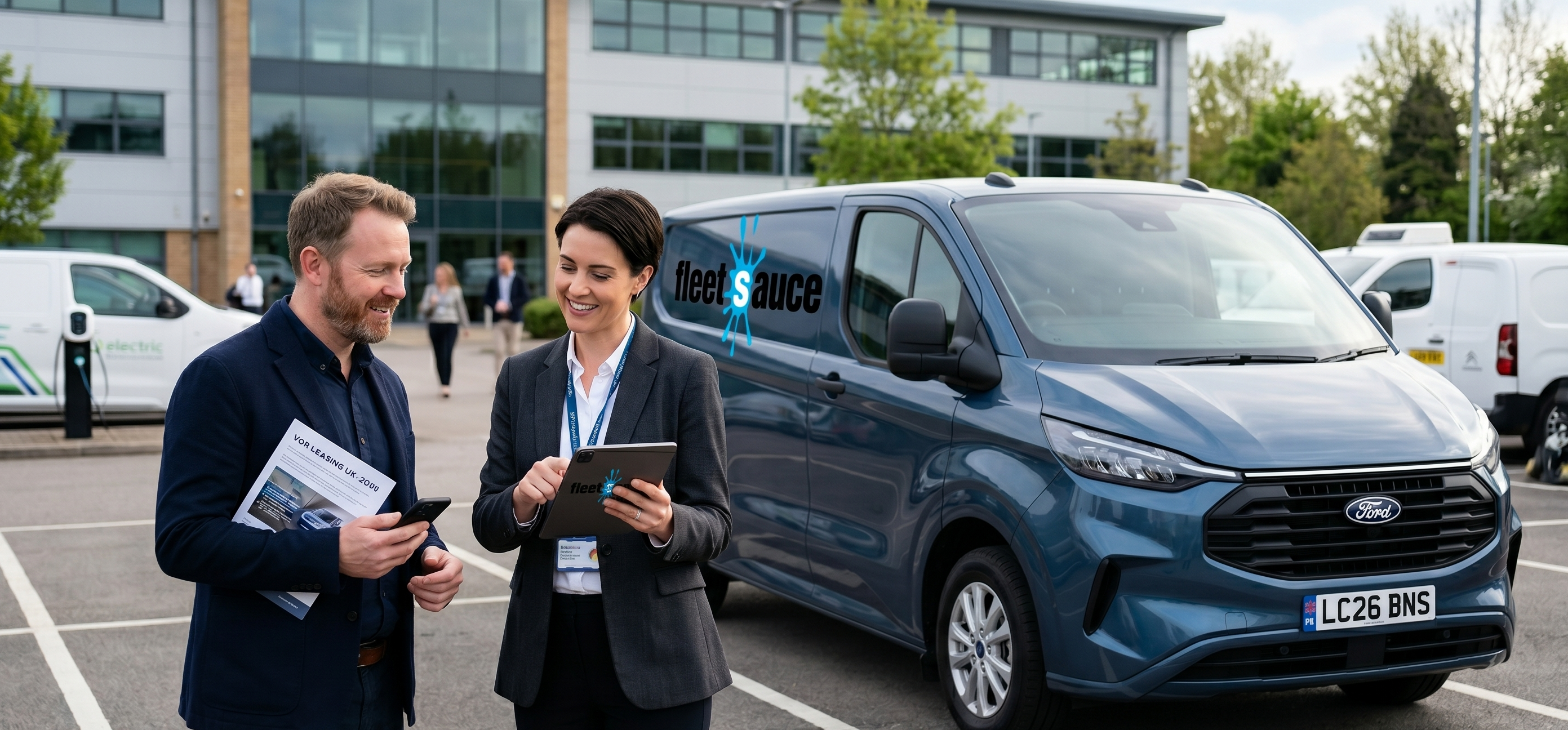
75% of UK fleet managers report that administrative tasks consume over 10 hours of their working week.
This inefficiency often results in missed maintenance intervals and increased vehicle wear.
FleetHub automates these processes, freeing up that time for your core business operations.
In our view, manual tracking is the primary cause of avoidable fleet downtime. Experience since 2010 shows that automated MOT and service reminders ensure 100% fleet uptime by preventing expired certifications and legal lapses.
BVRLA guidelines suggest regular safety inspections are mandatory for commercial fleets. Our software logs these checks digitally to provide a robust audit trail for your van leasing UK fleet, ensuring you remain compliant with health and safety legislation.
We provide a central dashboard that syncs with DVLA data to verify driver licences every six months. This reduces the risk of unauthorised driving and protects your corporate insurance premiums from 15% increases associated with high-risk profiles.
Reducing Total Cost of Ownership
Data indicates that monitoring driver behaviour through integrated telematics can reduce fuel consumption by up to 15%. This translates to a direct saving of approximately £450 per vehicle annually based on current UK diesel prices and average mileages.
Choosing maintained van leases allows businesses to fix their servicing costs for the entire duration of the contract. This protects your cash flow against the 12% rise in parts and labour costs seen across UK garages over the last 18 months.
Best practice suggests moving away from manual data entry, as 65% of UK SMEs still use spreadsheets for fleet management, which leads to errors. These errors often lead to overspending on maintenance by failing to identify underperforming or overdue vehicles.
Grey Fleet and Compliance Standards
A grey fleet is employees using their personal vehicles for business journeys instead of company-provided vans. This creates significant legal risks if the vehicle is uninsured for business use or lacks a valid MOT, potentially leaving the employer liable for accidents.
Fleetsauce software tracks insurance and MOT compliance automatically to protect your directors from prosecution under the Corporate Manslaughter Act. We ensure every vehicle on your account meets the required safety standards without requiring manual intervention from your staff.
FCA regulation serves as a baseline for all financial advice provided by Fleetsauce. This ensures our van leasing UK solutions remain transparent and compliant with the latest UK financial standards, giving you total peace of mind during the procurement process.
Our team of experts is ready to help you streamline your operations.
Contact our fleet specialists today
Why Fleetsauce is the Expert Guide for Your Van Fleet
90% of UK fleet managers report that finding reliable van leasing UK providers is their top priority for 2026.
Businesses often face a fragmented market where automated systems replace genuine expertise.
Experience since 2010 shows that a human-led approach is the only way to manage these complexities effectively.
Fleetsauce provides bespoke solutions that go beyond simple transactions. In our view, the Fleetsauce way ensures your fleet stays mobile through personal account management and tailored finance packages.
Our UK-based team consists of real people who understand the local market. It's our mission to provide the human touch in an increasingly digital industry.
Experience since 2010 shows that having a dedicated point of contact saves fleet managers an average of 10 hours per month in admin. Our experts handle the paperwork so you can focus on running your business.
We provide a holistic view of your operations, including our business car leasing UK pillar. This helps you manage both commercial and passenger vehicles under one strategic umbrella.
The Sauce Behind Our Competitive Pricing
We maintain a panel of major funders to ensure you receive the most competitive van leasing rates in the UK. This competition drives down costs, allowing us to offer cost-effective rentals starting from as little as £250 per month on specific van profiles.
Our 5-star customer service team works to demystify complex finance jargon. We explain everything from initial rentals to terminal pauses in plain English.
Transparency is at the heart of our 5-star service rating. We ensure all quotes include clear breakdowns of VAT and processing fees to avoid any hidden surprises.
You can source special offer vans with rapid delivery. Many of these vehicles are available with a 14-day lead time to keep your business moving.
Getting Started with Your 2026 Van Fleet
Modern logistics require rapid adaptation to changing emission zones and tax laws. Transitioning an entire fleet can feel overwhelming for busy business owners.
We use a simple 3-step process to get your new vans on the road. First, we provide a bespoke quotation tailored to your specific mileage and term requirements.
Second, we handle the credit application through our FCA-regulated partners. Finally, we coordinate delivery directly to your business premises anywhere in the UK.
Best practice dictates that you should review your fleet requirements at least six months before your current contracts end. BVRLA guidelines suggest that maintaining a young fleet reduces maintenance costs by up to 25% over a three-year cycle.
As we move into 2026, staying ahead of 4% BiK rates for electric vehicles is essential. Our team provides the data you need to make tax-efficient choices for your long-term fleet strategy.
We don't believe in one-size-fits-all solutions for your company vehicles. Every business has unique cash flow needs, which is why we offer flexible initial rental terms of 1 to 12 months.
Future Proof Your Fleet Strategy for 2026
Transitioning to electric models is vital as the ZLEV mandate requires 24% of new van sales to be zero-emission, while drivers benefit from 4% BiK tax rates. Experience since 2010 shows that early adoption helps businesses avoid the steep depreciation of diesel vehicles, which often lose 35% of their value annually.
Selecting a competitive van leasing UK package depends on whether you require 100% reclaimable VAT on maintenance through Business Contract Hire or the flexibility of a Finance Lease. BVRLA guidelines suggest that fixed-cost agreements protect your cash flow against interest rate fluctuations, which have remained volatile over the last 24 months.
In our view, managing a fleet requires more than just a vehicle; it requires the 100% data visibility provided by FleetHub. We maintain a 4.9/5 Trustpilot rating by delivering bespoke solutions that meet stringent FCA regulatory standards.
We're here to add the expert sauce to your fleet strategy and keep your drivers on the move. Let's build a more efficient future for your business together.
Frequently Asked Questions
How van leasing works for new businesses
New businesses can secure a lease by providing three to six months of bank statements to prove financial stability. Experience since 2010 shows that a larger initial rental, often equivalent to six or nine monthly payments, helps offset a lack of trading history.
Reclaiming 100 of VAT on a van lease
You can reclaim 100% of the VAT on your monthly rentals if the vehicle is used solely for business purposes. HMRC guidelines specify that this applies to commercial vehicles with a payload exceeding 1,000kg, provided there's no private use.
The most fuel-efficient van for 2026
The Renault Kangoo E-Tech is a highly efficient choice for 2026 with a zero-emission range of up to 186 miles. For diesel fleets, models achieving over 55 mpg remain the standard for cost-effective van leasing in the UK.
Maintenance in a business van lease
Maintenance is an optional add-on that covers all routine servicing and tyre replacements for a fixed monthly fee. BVRLA guidelines suggest that including maintenance can save businesses 20% on repair costs compared to pay-on-the-go servicing.
Exceeding mileage limits on a van lease
Exceeding your agreed mileage results in an excess mileage charge calculated at a fixed pence-per-mile rate. These charges typically range from 5p to 30p per mile, depending on the vehicle model and the finance provider.
Electric vans and the London Congestion Charge
Pure electric vans currently qualify for the Cleaner Vehicle Discount, which provides a 100% discount on the £15 daily Congestion Charge. Transport for London (TfL) has confirmed this exemption is scheduled to end on 25 December 2025, meaning all vans will pay from 2026.
Documents required for a business van lease application
Applicants must provide a valid UK driving licence and business bank statements for the last three months. In our view, having these documents ready ensures a 24-hour turnaround for credit decisions under FCA-regulated standards.

Guide Verified & Audited By
Director at Fleetsauce


