
Perhaps a new manager has asked for a bigger car, a colleague wants to take one abroad, and nobody can find a written answer to either request.
Many growing businesses reach this point after adding vehicles one at a time, with each decision agreed by email and remembered slightly differently by the people involved.
A clear company car policy settles those questions in advance and in one place, giving directors, finance, human resources and drivers the same reference whenever costs or conduct are discussed.
It also records how the business manages people who drive for work, which matters just as much whether the car is leased by the company or owned by the employee.
We'll show you how to set eligibility and vehicle rules, define driver duties, cover the main tax points and launch a policy that stays current.
Treat what follows as a working framework, with legal, tax and employment wording checked carefully by your own advisers before it is issued to staff.
Key Takeaways
- •
Understand what a company car policy is for and who should help to write it before any vehicle is ordered.
- •
Learn how to set fair eligibility, vehicle choice and private use rules that finance and drivers can both follow.
- •
Identify the licence, eyesight, phone, maintenance and grey fleet duties your written rules should make clear to everyone.
- •
Compare the company car, cash allowance and salary sacrifice routes, including the tax questions each one raises.
- •
Discover practical steps for launching the policy, collecting acknowledgements and reviewing the wording when circumstances or rules change.
Table of Contents
Purpose and Ownership of the Policy
Start by deciding what the document must control, because a policy that tries to answer everything at once is rarely read by the people it is meant to guide.
Why written rules matter
Employers must manage health and safety risks for workers who drive for work in the same way as other workplace risks, according to the Health and Safety Executive.
A written policy is one practical way to show who does what, although it needs risk assessment, consultation and follow-up behind it to mean something.
Who should help write it
Bring finance, human resources, operations and a few regular drivers into the early discussion, then give one named person authority to maintain the final version.
Drivers often spot awkward situations that managers miss, such as overnight parking, home charging or what happens when a booked service clashes with a customer visit.
Eligibility and Vehicle Choice
Eligibility and selection rules are where fairness is tested, so write them around job need and clear criteria rather than individual negotiation.
Setting eligibility rules
State which roles qualify, whether the car is provided for business need or as a benefit, and who approves exceptions when a case does not fit.
Cover probation, long absence, promotion, resignation and loss of licence, including how the vehicle is returned and who meets any early termination cost allowed by employment terms.
Choosing suitable cars
Set a budget based on the whole cost of running each option, then add limits for emissions, safety equipment, practicality and typical journey length.
A short approved list is usually easier to manage than open choice, and company car leasing options can be reviewed against it each time a vehicle is due.
Annual mileage allowances belong in the same rules, and our guide to car lease mileage limits explains what to estimate before ordering.

For electric cars, range needs should be part of that conversation, while charging access at home and work should be confirmed before ordering.
See our electric car leasing options and EV charger guide when planning that conversation with drivers.
Driver Duties and Road Safety
Driver rules should be specific enough to act on, with a clear statement of what is checked, how often it happens and what follows a problem.
Licence, eyesight and phones
Set a schedule for licence checks, using the official online service where a driver can share a code that remains valid for 21 days in Great Britain.
Drivers must meet the eyesight standard, including reading a number plate from 20 metres, and should wear glasses or contact lenses whenever they need them.
Holding and using a phone while driving is illegal and can bring six penalty points and a £200 fine, so we would state that managers must not expect drivers to answer calls or messages while driving.
Maintenance, fines and accidents
Name who books servicing and tyres, how drivers report defects and warning lights, and when a car must be taken off the road until it has been checked.
In Great Britain, cars generally need their first MOT by the third anniversary of registration, although leased and used vehicles should still be tracked individually for their due dates.
Explain accident reporting, penalty notices, damage and parking charges in plain steps, and say which costs the driver may be asked to meet.
Our accident management service and fair wear and tear guide can inform those two sections.

Tax, Allowances and Grey Fleet
Tax choices affect both the business and the driver, which is why the policy should describe each route and point people towards current, individual advice.
Company cars and Benefit-in-Kind
A company car available for private use normally creates a taxable benefit.
A pool car is treated differently only when it is provided because of work, several employees use it, nobody usually has it to themselves, private use is merely incidental and it is not normally kept overnight near employees' homes, unless on the employer's premises.
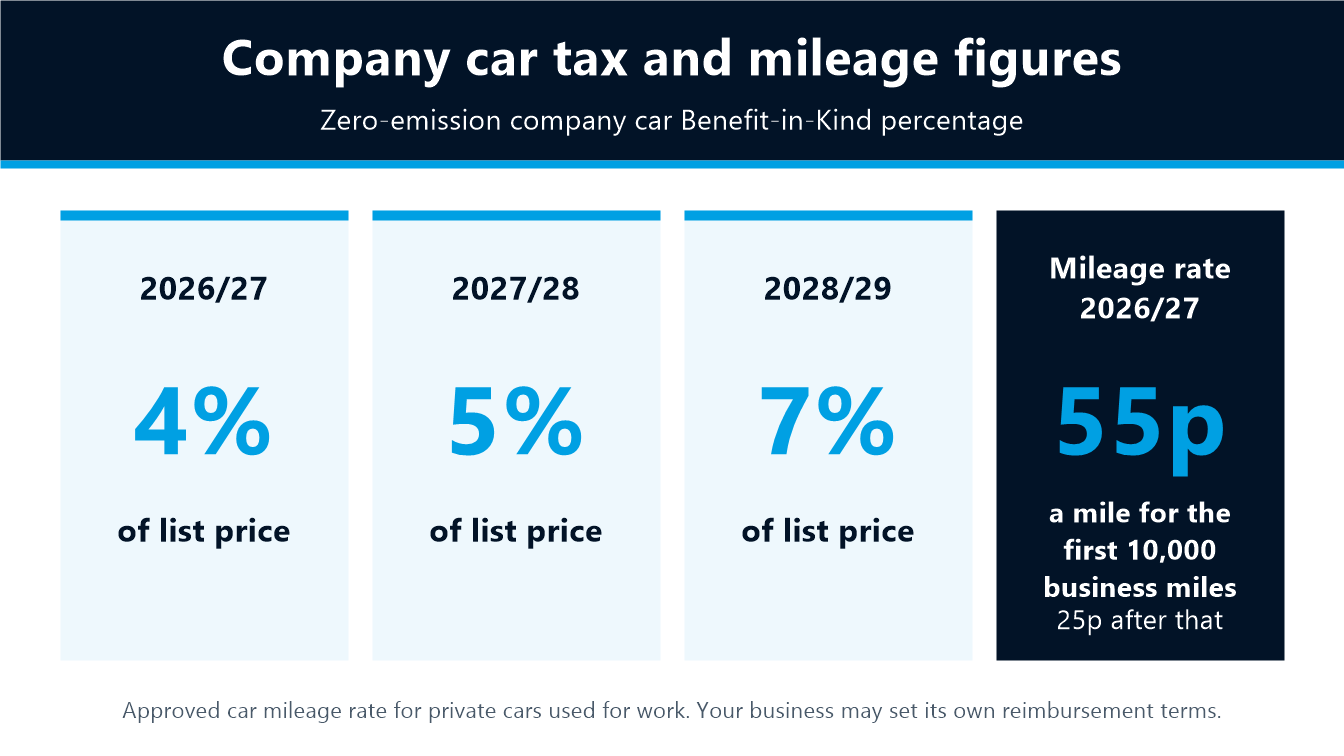
The Benefit-in-Kind percentage for a zero-emission car is 4% in 2026/27, rising to 5% and then 7% over the following two tax years.
Company car benefits are also due to be taxed through payroll from 06/04/2027, so agree who will report changes of car, availability and private fuel promptly.
Our Benefit-in-Kind guide covers the wider calculation that drivers are likely to ask about when choosing.
See also the BIK and P11D changes from April 2027 before setting your reporting routine.
Cash, sacrifice and own cars
If you offer a cash allowance instead of a car, explain eligibility, tax treatment and the standard the employee's vehicle must meet for work journeys.
Salary sacrifice changes the employment contract and needs separate care, particularly around minimum wage and leaving, as our salary sacrifice scheme information introduces.
Our employer salary sacrifice guidance and guide to opting out of a salary sacrifice car scheme cover points to include.
Employees using their own cars form part of the grey fleet, so check licence, insurance for business use and roadworthiness, and record journeys before paying mileage.
The approved mileage rate for cars in 2026/27 is 55p for the first 10,000 business miles and 25p afterwards, although your business may set its own reimbursement terms.
From 06/04/2027, the rate above 10,000 business miles is due to rise to 35p, so date the figures in your policy.
Launching and Reviewing the Policy
A policy only works when people know it exists, understand the parts that affect them and see it applied consistently after the first week.
Five steps to launch
List current vehicles, drivers and informal promises, assess the main driving risks, draft the rules, consult those affected and then obtain advice before final approval.
We would brief managers first, then publish a short driver summary, collect signed acknowledgements and give people a named contact for questions that the written wording does not answer.
Keeping it up to date
Review the document at least once a year as a sensible internal standard, with an earlier check after serious incidents, new vehicle types or relevant tax changes.
We find a dated change log useful because it shows which version applied, why wording moved and who approved it when a question comes up later.
Compare incidents, late servicing, mileage and exceptions as well, so that the next review starts with evidence from your own fleet.
Making Your Company Car Policy Work in 2026
Keep the first version short enough to use, with detailed procedures held in appendices that can be updated without rewriting the main rules each time.
Our article on fleet risk management adds more on assessing hazards, which is a helpful next read if your drivers cover many business miles.
Frequently Asked Questions
What should a company car policy include?
It should cover eligibility, vehicle choice, private use, drivers, safety checks, maintenance, accidents, costs, tax reporting, leaving arrangements and the date of the next review.
Include grey fleet rules as well if anyone drives their own vehicle for business journeys.
Is a company car policy a legal requirement?
The duty is to manage work-related road risk, and a written policy is a practical way to record the arrangements your business has chosen.
Ask your health and safety adviser which written records and assessments your own circumstances call for.
How often should the policy be reviewed?
An annual review is a sensible starting point, supported by earlier updates when incidents, vehicle types, working patterns or tax rules change.
Record each change and then tell affected drivers what is different and from which date it applies.
Does the policy apply to employees using their own cars?
It should, because journeys made for work in private vehicles still need suitable checks, insurance cover, risk assessment and records from the employer.
Set out what evidence drivers must provide, who checks it and how often you ask for it.
Who is responsible for fines and penalties?
Drivers are generally responsible for their own driving offences, while the agreement and your employment terms affect how notices and charges are administered.
Explain any recovery from pay carefully and obtain employment advice before including it in the document.

Guide Verified & Audited By
Director at Fleetsauce
Putting Your Company Car Rules in Order?
Share your vehicle needs and replacement plans so we can discuss business leasing options that fit within your written policy.
Why Choose Fleetsauce?
At Fleetsauce, we specialise in helping SMEs find the right car leasing solutions — not just the cheapest leasing deal.
With access to a wide range of leasing funders and hundreds of franchised dealerships across the UK, we find the best leasing deals and vehicle availability for your business and employees.
You’ll work directly with an expert dedicated account manager who understands the needs of companies — offering expert advice with a friendly, professional approach that you can always call directly.
With a five-star rating from Trustpilot, we are proud of our reviews and is evidence that we look after our new and existing customers.
Whether you're managing one vehicle or a fleet, we make business leasing simple, flexible, and cost-effective.





What our customers say...

Brilliant from start to finish, so helpful even finding a better deal than the one enquired for. Customer service so far is over and above!
Very helpful - found new Volvo V60 Ultimate on very good deal, much better than any garage I approached. Everything else from there was simple and well looked-after. Would highly recommend. Staff were very approachable ...
Excellent service, very friendly and reliable. Won't hesitate to use again.


