Every rechargeable battery loses some of its capacity as it ages, and the large pack inside an electric company car is certainly no exception to that long-established rule.
If you run a fleet, the worry is practical, since less capacity means less range, tighter journey planning and possible questions about what the car will be worth later.
The good news for business drivers is that several of the things affecting battery wear sit within your control, particularly temperature, parking arrangements and the everyday charging routine.
We'll show you how to manage those risks, starting with what degradation means and which conditions put a battery under the greatest strain during normal working weeks.
You will also see what two manufacturer warranties cover, how business contract hire changes the resale risk and which driver habits belong in your written fleet guidance.
The aim is a calm, factual view that helps you set sensible expectations with directors and drivers. That conversation is far easier when it happens before the next replacement cycle begins.
Key Takeaways
- •
Understand what battery degradation means and why it differs from the day-to-day state of charge shown on a dashboard.
- •
Identify how heat, charging speed and parking arrangements can affect the long-term condition of a vehicle battery.
- •
Compare the published battery warranty limits for Volkswagen electric cars and Ford electric vans before you set mileage.
- •
Learn how business contract hire places the resale value risk with the funder rather than leaving it with your company.
- •
Discover which simple driver habits are worth writing into your fleet guidance and reviewing at each vehicle handover.
Table of Contents
What Battery Degradation Means for a Fleet
Battery degradation is the gradual fall in the amount of energy a battery can store, measured against what it could hold when the vehicle was first registered.
State of health and state of charge
State of charge describes how full the battery is today, much like a fuel gauge, whereas state of health is about how much usable capacity remains. The second figure is always judged against the battery as new.
A driver can therefore see a full charge on the dashboard while the pack holds slightly less energy than it did on delivery day, which is easy to miss.
Why the difference matters at work
The change usually arrives slowly. Drivers often notice it first as a shorter winter range on a route that used to feel comfortable with charge to spare.
Winter weather also reduces range for reasons unrelated to permanent wear, so we would avoid judging battery condition from a single cold week of journeys or one anxious driver report.
The sensible approach is to compare like with like, using the same route in similar weather. You can then ask an authorised repairer for a measurement if the gap looks persistent.
Our guide to managing driver range anxiety covers the day-to-day side of that conversation, which is often more urgent than the battery chemistry itself.
What Affects Battery Wear
Temperature is one of the clearest factors, because lithium batteries are designed to work within a comfortable band and need help when conditions move well outside it.
Heat and thermal management
Volkswagen describes a comfortable operating range of roughly 20°C to 40°C. Its guidance adds that thermal management systems work to keep the pack within suitable limits during driving and charging.
Its advice for hot weather is to park in a garage or shade, charge to around 80% rather than completely full and use the slowest practical charging speed.
The same guidance notes that air-cooled batteries are more sensitive to heat, which is worth checking in the specification when you compare similar vehicles for a warm yard or depot.
Rapid charging in daily use
Rapid direct current charging is a normal part of fleet life in the UK, particularly for drivers who cover long distances and cannot wait several hours between appointments or site visits.
Charging usually slows as the battery fills, so the last part of a rapid charge can take noticeably longer than drivers expect.
We think the fairest rule is to treat rapid charging as a useful tool for journeys that need it, while planning routine top-ups at home or at the workplace.
Our guide to business EV fleet charging solutions looks at the options in more detail.

What Battery Warranties Cover
A battery warranty is the firmest published promise you can plan around, although the limits and exclusions belong to each manufacturer and should be read for the exact model.
Volkswagen electric cars
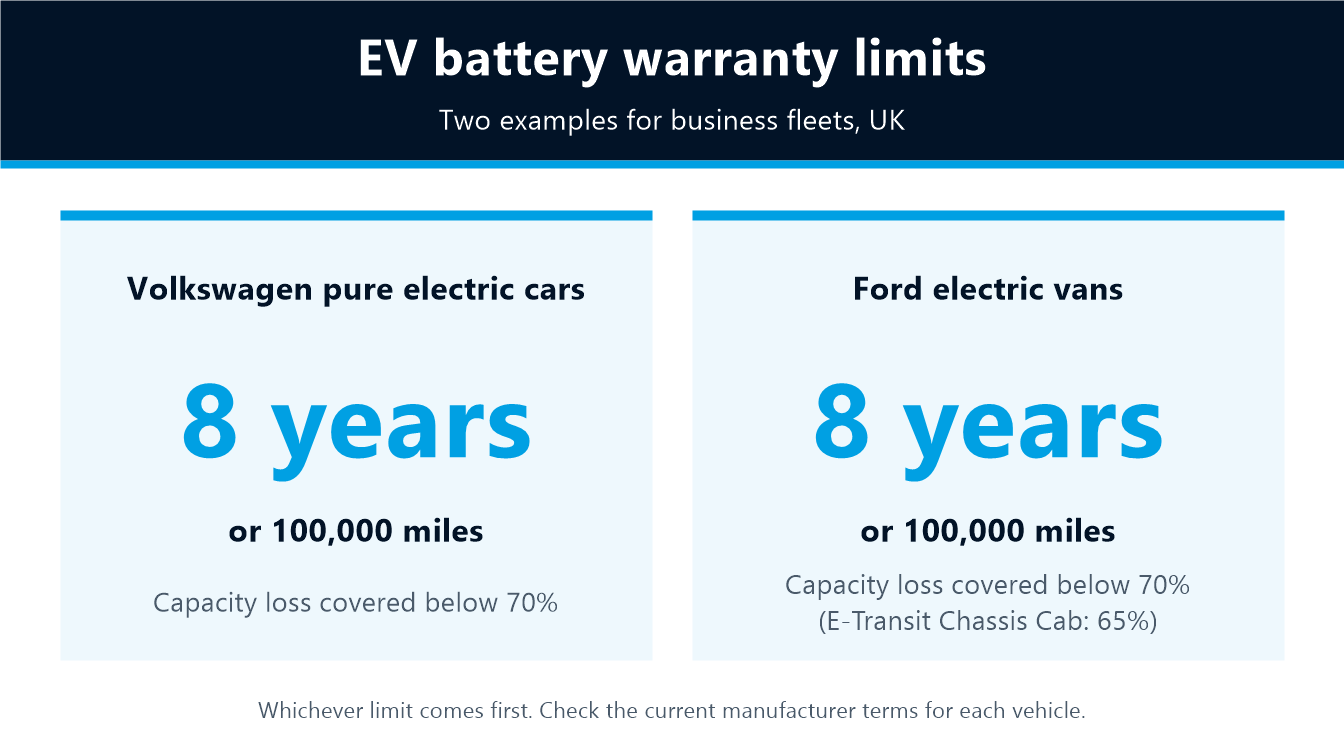
Volkswagen UK covers the high-voltage battery in its pure electric cars, including the ID.3, ID.4, ID.5 and ID.7. The limit is 8 years or 100,000 miles, whichever arrives first.
You can compare current models on our Volkswagen car lease deals page before planning replacements.
The cover addresses material and manufacturing defects, and gradual capacity loss is treated as a defect only when capacity falls below 70% of the figure recorded at first registration.
That capacity reading is taken by an authorised Volkswagen repairer, so a driver's estimate or a dashboard range figure would not be enough on its own to support a claim.
Ford electric vans
Ford UK describes an 8-year or 100,000-mile battery warranty for its electric vans, again ending at whichever limit comes first, with cover for capacity loss below 70%.
The figure is 65% for E-Transit Chassis Cabs, which shows why two vehicles carrying the same badge can still have different thresholds that matter to a transport manager.
High-mileage operations should check the distance limit with particular care, as a van covering 30,000 miles a year would pass 100,000 miles during its fourth year of service.
Our electric van leasing team can talk through term and mileage together, so that the two figures are agreed with the warranty limit in view.
See our Ford van lease deals and our business electric van lease guide for the wider choices.
Resale Value and Business Contract Hire
Concern about used values is often the hidden half of the battery question, particularly for a business that buys vehicles outright and must sell them a few years later.
Who carries the resale risk
Under business contract hire, the funder owns the vehicle and sets the rental using its own view of future value, and your business hands the car back at the end.
The resale outcome therefore sits with the funder. Your company then remains responsible for agreed mileage, fair wear and tear, servicing obligations and any other conditions written into the agreement.
In our view that division is one of the most useful features of leasing while buyers are still forming opinions about older electric vehicles and their remaining battery capacity.
Tax points to weigh with your accountant
For employees and directors, the company car Benefit-in-Kind rate on a zero-emission car is 4% of list price for 2026/27, and published rates rise in later tax years.
Ownership works differently. A business that buys a new and unused zero-emission car may claim a 100% first-year allowance, currently available until 31/03/2027 for corporation tax and 05/04/2027 for income tax.
Leased cars are treated differently from bought ones, so it makes sense to ask your accountant to compare both routes using your own tax position and planned replacement dates.
How to Look After Fleet Batteries
Good battery care works best as a short, repeatable routine that drivers understand, rather than a long technical document which nobody opens after their first week with the car.
Charging guidance for drivers
Start by asking drivers to follow the charging limit recommended in the handbook. Encourage them to use scheduled off-peak home charging where the vehicle and charger support it and to avoid unnecessary full charges.
Hot days deserve a specific note, covering shade, slower charging and a lower charge target, while long journeys may justify a fuller battery that is used soon after charging finishes.
Records, servicing and handover
Keep service dates, software updates and any warning messages in one place, because a clear history helps your repairer and supports a warranty conversation if capacity appears to have fallen.
Our fleet services can sit alongside your leasing arrangements, and a named person in your business should still own the routine and review it at set intervals.
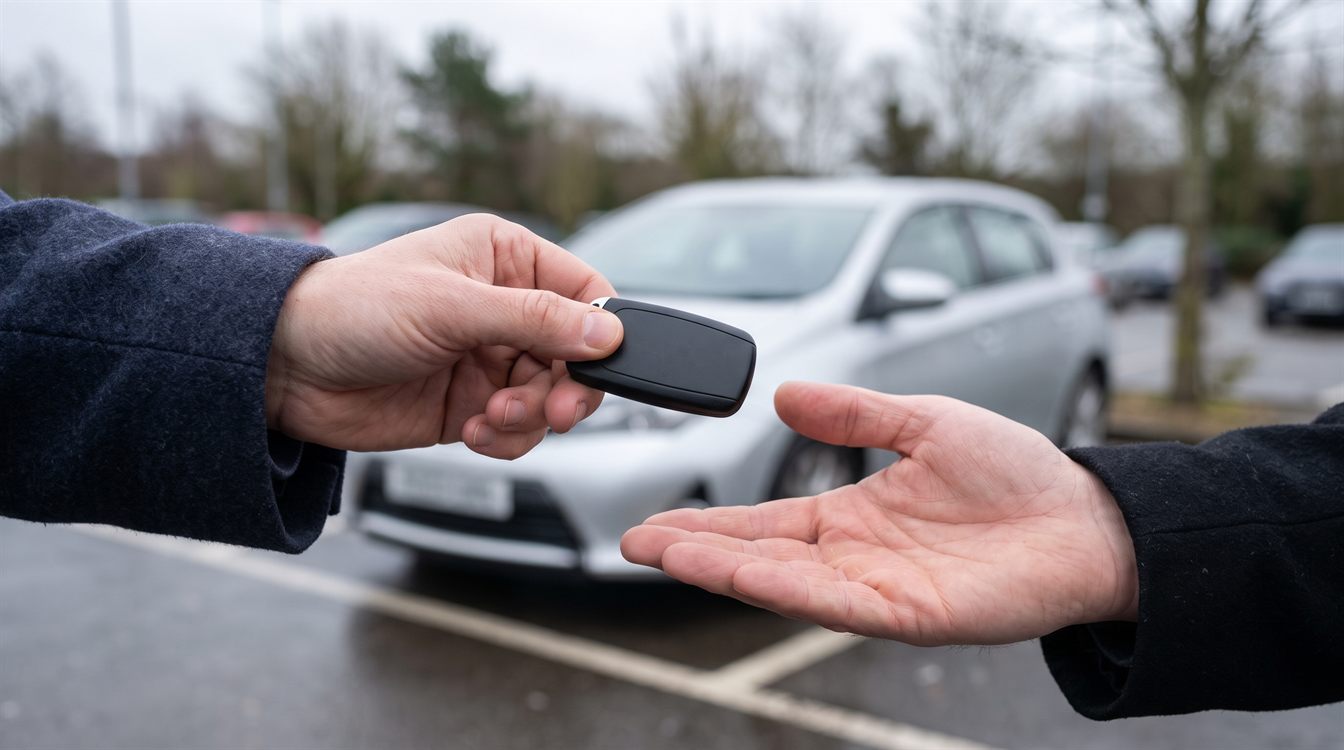
Handover is a good moment to remind a new driver of the charging rules, record the starting mileage and agree who reports a sudden change in range.
Planning Electric Fleets for 2026 and Beyond
Battery wear deserves a place in your fleet plan, but it sits beside range needs, charging access, tax, mileage and contract terms rather than standing above all of them.
Start with the journeys and check each warranty against the intended term and mileage. You can then give drivers a one-page charging routine that they can follow without specialist knowledge.
For a wider view of preparation, our fleet electrification checklist sets the battery question within the rest of the changeover, from site surveys through to driver communication.
We would also check actual mileage against the lease limit every few months and before each renewal, so that any drift is spotted early.
Frequently Asked Questions
Do electric car batteries wear out?
They lose some capacity with age and use. The pace depends on factors such as temperature, charging pattern and the design of the vehicle's own battery management system.
A published warranty gives you a floor for defects and capacity loss within stated limits, although it is no forecast of how any individual car will perform.
Is rapid charging bad for a company car battery?
Occasional rapid charging is part of normal use, and cars manage charging speed to protect the pack, which explains why the rate slows as the battery approaches full.
For routine top-ups, slower charging at home or work is a sensible habit, especially during very hot weather when Volkswagen advises charging as slowly as possible.
What does 70% capacity mean in a warranty?
It is the threshold below which Volkswagen or Ford may treat capacity loss on the covered vehicles as a warranty matter, subject to the age and mileage limits.
Anything above that level is generally regarded as ordinary ageing under those terms, so check the wording and the testing process for each model in your fleet.
Who pays if a leased car loses range?
A genuine defect within the manufacturer's limits is a warranty matter. Under contract hire, the funder then carries the resale value risk at the end of the term.
Report any marked change promptly and keep service records, because late reporting can make it harder to show when the problem began.
Should drivers charge to full every night?
Daily full charges are unnecessary for many routes, and a lower target set in the car can leave ample range while following hot-weather advice from manufacturers.
The handbook for each model should have the final word, since recommended limits vary between battery types and between manufacturers.

Guide Verified & Audited By
Director at Fleetsauce
Planning Electric Vehicles for Your Business Fleet?
Tell us about your routes, mileage and charging access, and our team will help you shortlist business lease options that fit.
Why Choose Fleetsauce?
At Fleetsauce, we specialise in helping SMEs find the right car leasing solutions — not just the cheapest leasing deal.
With access to a wide range of leasing funders and hundreds of franchised dealerships across the UK, we find the best leasing deals and vehicle availability for your business and employees.
You’ll work directly with an expert dedicated account manager who understands the needs of companies — offering expert advice with a friendly, professional approach that you can always call directly.
With a five-star rating from Trustpilot, we are proud of our reviews and is evidence that we look after our new and existing customers.
Whether you're managing one vehicle or a fleet, we make business leasing simple, flexible, and cost-effective.




What our customers say...

Brilliant from start to finish, so helpful even finding a better deal than the one enquired for. Customer service so far is over and above!
Very helpful - found new Volvo V60 Ultimate on very good deal, much better than any garage I approached. Everything else from there was simple and well looked-after. Would highly recommend. Staff were very approachable ...
Excellent service, very friendly and reliable. Won't hesitate to use again.